

In industries that rely on the processing of fine powders, such as chemicals, mining, food, and pharmaceuticals, particle size distribution plays a critical role in determining product quality, production efficiency, and process costs. The Industrial Air Classifier for Improved Powder Processing Efficiency has emerged as a vital solution to enhance the separation of fine particles, offering precise control over particle size and improving overall process efficiency. This article explores the importance of air classifiers, their key technologies, performance factors, and their evolving role in industrial powder processing.
The demand for fine powders has significantly increased across several industries, driven by the need for materials with specific properties such as uniform particle size and density. Whether in the production of high-performance materials or the processing of raw minerals, the ability to efficiently classify powders based on particle size is crucial to meeting industry standards and improving production efficiency.
In sectors such as mining, chemicals, and pharmaceuticals, manufacturers require technologies that not only improve the precision of particle separation but also reduce operational costs. The Industrial Air Classifier addresses these needs by offering enhanced classification performance, reduced energy consumption, and minimized material waste.
At its core, an industrial air classifier works by using air flow to separate particles of different sizes. Air is passed through a chamber containing the powdered material, where particles are classified based on their aerodynamic properties. Lighter particles, with smaller sizes, are carried by the air stream, while heavier particles fall under gravity into a separate collection zone.
Several key technologies are integral to the performance of modern air classifiers:
Cyclonic Separation: This technique uses centrifugal forces to segregate particles based on their size and density.
Aerodynamic Classification: Air classifiers exploit the differential settling velocities of particles to achieve separation.
Multi-Stage Classification: Some classifiers feature multiple stages, improving classification precision by refining the particle separation process.
Industrial air classifiers are typically composed of several components:
Inlet Airstream: This component directs the airflow into the classifier chamber.
Classifying Chamber: The chamber is where the particle separation occurs, featuring an adjustable nozzle or rotor that helps control airflow and particle movement.
Collecting System: Separated particles are collected in different chambers or bags, allowing for precise separation.
Motor and Controls: These systems regulate airflow speed, particle collection, and overall system efficiency.
The materials used in constructing industrial air classifiers must be durable enough to withstand the abrasive nature of powder processing. Commonly used materials include high-strength steel and alloyed materials that provide corrosion resistance and wear protection. Manufacturing processes often involve precise machining and welding techniques to ensure consistent performance and long-term reliability.
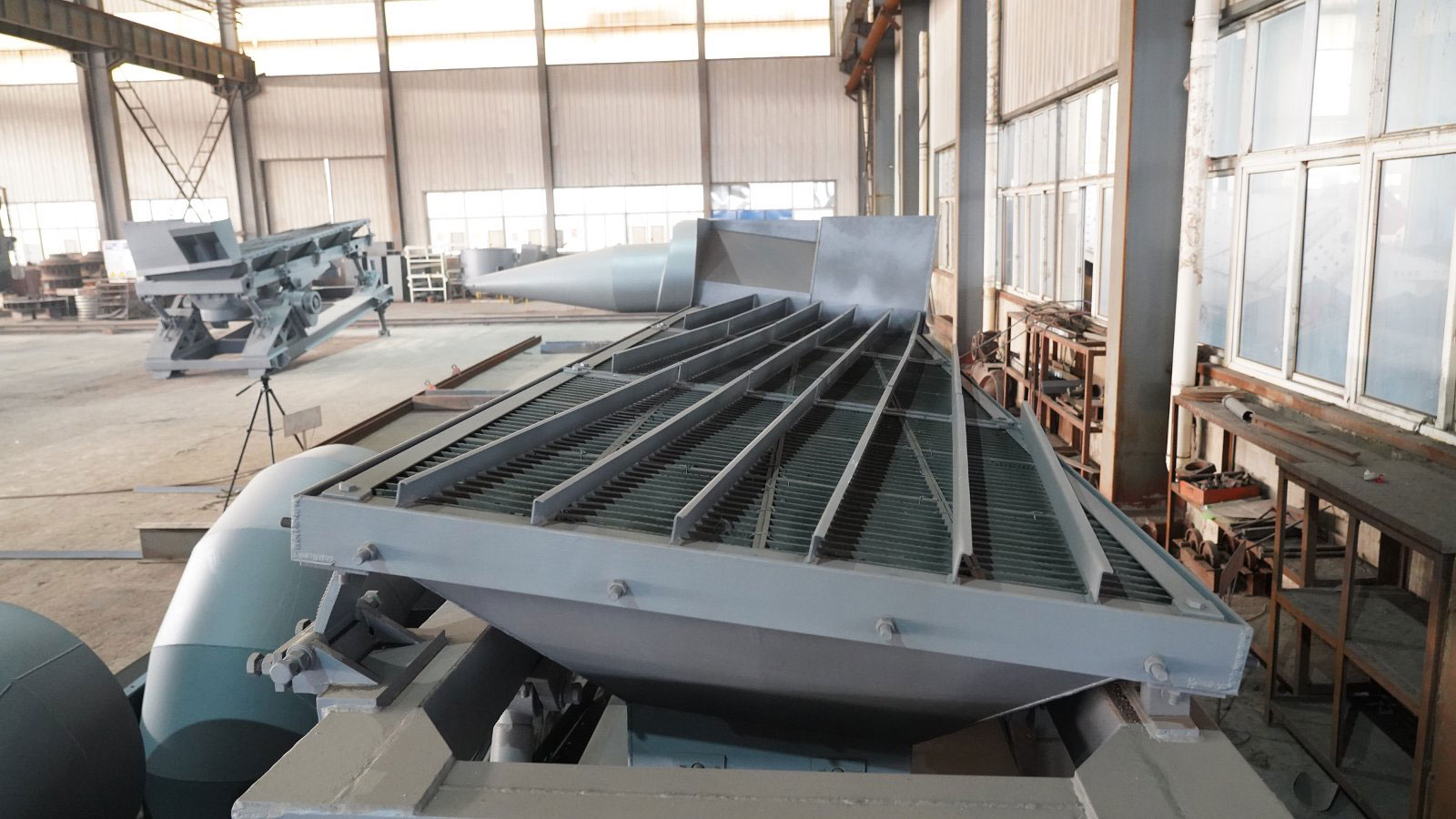
The performance of an industrial air classifier can be influenced by several factors:
Airflow Velocity: The speed and volume of airflow can directly affect the classification efficiency, as faster air speeds may lead to finer particles being classified.
Particle Properties: Particle size, shape, and density all play a role in how effectively they are separated.
System Configuration: The design and configuration of the classifier, including the number of stages and airflow patterns, can determine its separation accuracy.
Material Quality: The robustness of the components, especially the rotor and air chamber, influences long-term performance.
When selecting a supplier for industrial air classifiers, companies should consider the following factors:
Technology and Innovation: The supplier should offer advanced technologies such as multi-stage separation or variable airflow control.
Customization Options: Suppliers that can provide tailored solutions to meet specific processing requirements offer added value.
Maintenance Support: Ongoing technical support, spare parts availability, and service options are essential for maintaining system performance over time.
Reputation and Reliability: Vendor reputation, customer reviews, and case studies can provide insight into the reliability of the equipment.
Several challenges persist in the field of powder processing, including:
Inconsistent Particle Size Distribution: Poor separation leads to variations in material properties, which can affect product quality.
High Energy Consumption: Many air classifiers require significant amounts of energy to operate, raising operational costs.
Clogging and Maintenance: Fine powders can clog classifier systems, leading to frequent downtime and maintenance.
Dust Control: In industries like pharmaceuticals and chemicals, managing dust is critical to both worker safety and environmental compliance.
The industrial air classifier addresses many of these issues by providing precise particle separation, optimizing energy use, and offering easier maintenance options.
Industrial air classifiers are used across various sectors:
Mining: In mineral processing, air classifiers are used to separate fine particles of valuable minerals from unwanted materials.
Pharmaceuticals: Air classifiers ensure the production of high-purity powders with consistent particle size for pharmaceutical formulations.
Food Processing: In the food industry, these classifiers help improve product consistency, such as in the production of flour or powdered milk.
Chemical Industry: They are used to refine and separate chemicals and catalysts to specific particle sizes, enhancing material performance.
One example is the use of air classifiers in the production of cement, where they help separate fine and coarse particles to achieve consistent product quality.
The future of industrial air classifiers looks promising, with several trends emerging in the industry:
Energy Efficiency: As companies look to reduce operating costs, energy-efficient air classifiers with variable airflow control and optimized power usage are becoming more popular.
Automation: The integration of automation and smart technologies, such as real-time monitoring and remote control systems, is increasing the precision and reliability of air classifiers.
Sustainability: As environmental concerns grow, there is a push for sustainable practices in powder processing. Air classifiers are expected to evolve to handle recyclable and eco-friendly materials.
Modular Designs: Future air classifiers may feature modular designs, allowing for easier customization and upgrades, improving their versatility.
What is the main advantage of using an industrial air classifier?
The primary advantage is its ability to precisely separate powders based on particle size, improving product quality, reducing material waste, and increasing processing efficiency.
Can air classifiers be used for different types of powders?
Yes, air classifiers are highly versatile and can be used for a wide range of materials, including metals, minerals, pharmaceuticals, and food products.
What are the typical maintenance requirements for an air classifier?
Maintenance typically involves cleaning air ducts, inspecting components for wear, and ensuring airflow settings are calibrated correctly. Routine checks are essential for optimal performance.
Tel : +86-315-5282855
E-mail : jinzexuanmeijixie@gmail.com
Address : 1.6 km south of Xinjichang Road,
Tangshan City, Hebei Province, China

Copyright © 2017.Company name All rights reserved.More Templates


Trang web này sử dụng cookie để đảm bảo bạn có được trải nghiệm tốt nhất trên trang web của chúng tôi.

 English
 Español
 Pусский
 Монгол



 Whatsapp
 Điện thoại