

Efficient particle classification is a critical requirement for modern industrial mineral processing plants. With the increasing complexity of ore bodies and industrial minerals, achieving precise separation while maintaining high throughput and low operational costs has become a priority. Conventional mechanical screens and classifiers often face challenges such as rapid wear, frequent maintenance, and inconsistent separation efficiency. The Air Classifier with Low Maintenance and Stable Performance addresses these issues by combining advanced aerodynamic principles with durable construction, providing reliable, energy-efficient, and continuous operation for a wide range of industrial applications.
Industrial mineral processing has seen a growing demand for high-precision classification equipment due to stricter product specifications and declining ore grades. Minerals such as quartz, feldspar, barite, and industrial aggregates require accurate particle size separation to meet quality standards and optimize downstream processes. Inefficient classification can result in material loss, reduced recovery rates, and higher energy consumption. As a result, processing plants seek air classifiers that not only deliver high separation efficiency but also offer stability and low maintenance requirements. The Air Classifier with Low Maintenance and Stable Performance is specifically designed to meet these evolving market needs.
Air classifiers function by exploiting aerodynamic forces to separate particles based on size, shape, and density. In this system, material enters a classifier chamber where a controlled air stream lifts lighter particles while heavier materials descend to collection points. Adjustable rotor speed, airflow velocity, and feed rate enable precise control of separation efficiency. Unlike traditional screens, air classifiers can handle fine powders and dusty materials without clogging or excessive wear. The Air Classifier with Low Maintenance and Stable Performance integrates optimized rotor geometry, airflow channels, and collection chambers to maintain consistent classification while minimizing energy consumption and maintenance demands.
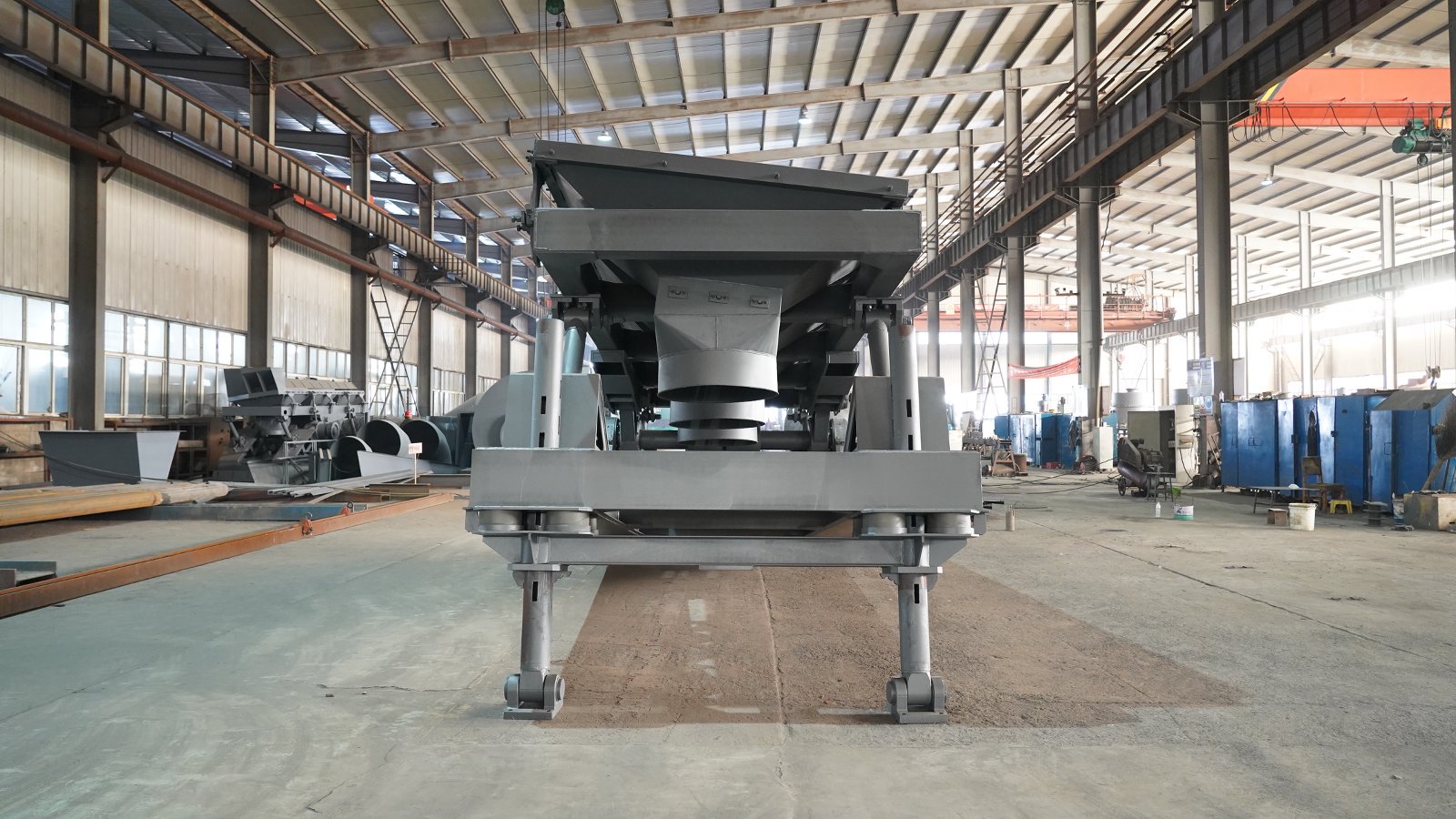
Durability and operational stability are fundamental to the classifier’s performance. The machine is constructed with high-strength steel frames, reinforced rotor assemblies, and abrasion-resistant components for long-term industrial use. Critical areas, including rotor blades and airflow channels, are lined with wear-resistant alloys or polymers to prevent premature degradation. The precision manufacturing of rotors and stators ensures balanced operation, reducing vibration and mechanical stress. Modular design features allow quick replacement of worn components, further minimizing downtime. Together, these design elements provide a classifier capable of continuous operation with low maintenance requirements, ensuring stable performance across diverse industrial conditions.
Several operational parameters influence the efficiency and consistency of air classification:
Particle Size Distribution: Correct rotor and chamber configuration ensures effective separation of fine and coarse materials.
Feed Moisture Content: High moisture levels can reduce airflow efficiency and increase the risk of agglomeration.
Airflow and Rotor Speed: Optimized airflow and rotor parameters maintain classification accuracy and minimize wear.
Material Abrasiveness: Proper selection of materials for wear-prone components is essential for long-term durability.
Monitoring and adjusting these factors enables plants to achieve stable operation, consistent product quality, and energy-efficient performance.
Selecting a qualified supplier is crucial to ensure the classifier performs reliably over time. Key considerations include:
Engineering Expertise: Suppliers with experience in industrial mineral processing can recommend optimal configurations and integration strategies.
Quality Standards: Adherence to ISO or equivalent manufacturing standards guarantees mechanical reliability and uniform performance.
Technical Support: Comprehensive installation guidance, commissioning, and spare parts availability reduce operational risk.
Proven Track Record: References and case studies demonstrating successful industrial deployment provide assurance of long-term performance.
A dependable supplier ensures the classifier delivers sustained efficiency and minimizes maintenance challenges.
Despite advanced design, air classifiers may face operational challenges such as wear of rotors and liners when processing abrasive minerals, reduced efficiency under high-moisture conditions, and performance variability due to fluctuating feed rates. These issues can be mitigated by routine inspection, timely replacement of wear components, and adjustment of airflow and rotor parameters, ensuring consistent classification over prolonged operation.
The Air Classifier with Low Maintenance and Stable Performance is widely utilized across mining, industrial mineral, and aggregate processing applications. In feldspar and quartz operations, it ensures precise separation of fine particles for quality control. In barite, limestone, and talc processing, it enhances particle uniformity, reducing oversize fractions and improving downstream grinding and blending efficiency. Its ability to handle continuous, high-volume feeds makes it suitable for large-scale industrial plants seeking reliable and energy-efficient particle classification solutions.
The mineral processing industry increasingly emphasizes automation, energy efficiency, and real-time process monitoring. Modern air classifiers integrate sensors to track airflow, rotor speed, and throughput, enabling dynamic optimization of operating parameters. Developments in wear-resistant alloys, modular design, and energy-efficient motors further enhance durability and reduce operational costs. As plants contend with lower ore grades and stricter product standards, the Air Classifier with Low Maintenance and Stable Performance will continue to play a key role in ensuring precise, efficient, and sustainable industrial mineral processing.
Q: What particle sizes can this air classifier handle?
A: It can separate a wide range of particle sizes, from fine powders to coarse materials, depending on rotor and airflow configuration.
Q: How does it achieve low maintenance?
A: Durable construction, wear-resistant components, and modular design minimize wear and simplify replacement of critical parts.
Q: Can it operate continuously in industrial plants?
A: Yes, it is designed for continuous, stable operation with minimal maintenance, provided that feed characteristics and operational parameters are properly managed.
Tel : +86-315-5282855
E-mail : jinzexuanmeijixie@gmail.com
Address : 1.6 km south of Xinjichang Road,
Tangshan City, Hebei Province, China

Copyright © 2017.Company name All rights reserved.More Templates


Trang web này sử dụng cookie để đảm bảo bạn có được trải nghiệm tốt nhất trên trang web của chúng tôi.

 English
 Español
 Pусский
 Монгол



 Whatsapp
 Điện thoại